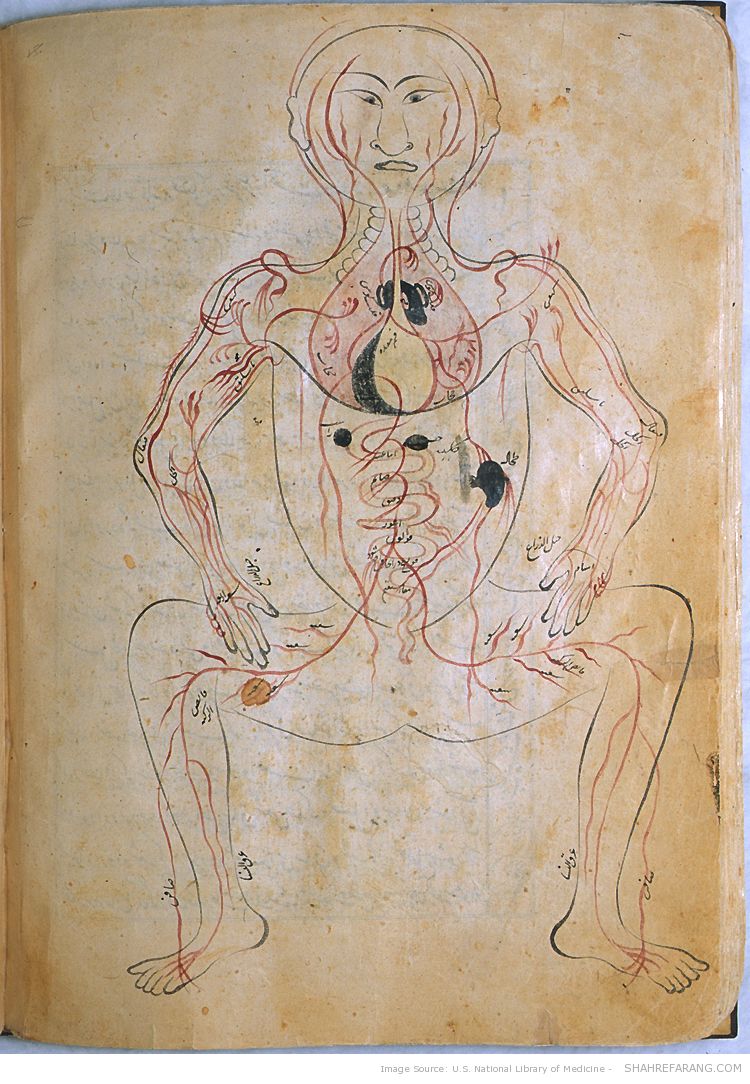
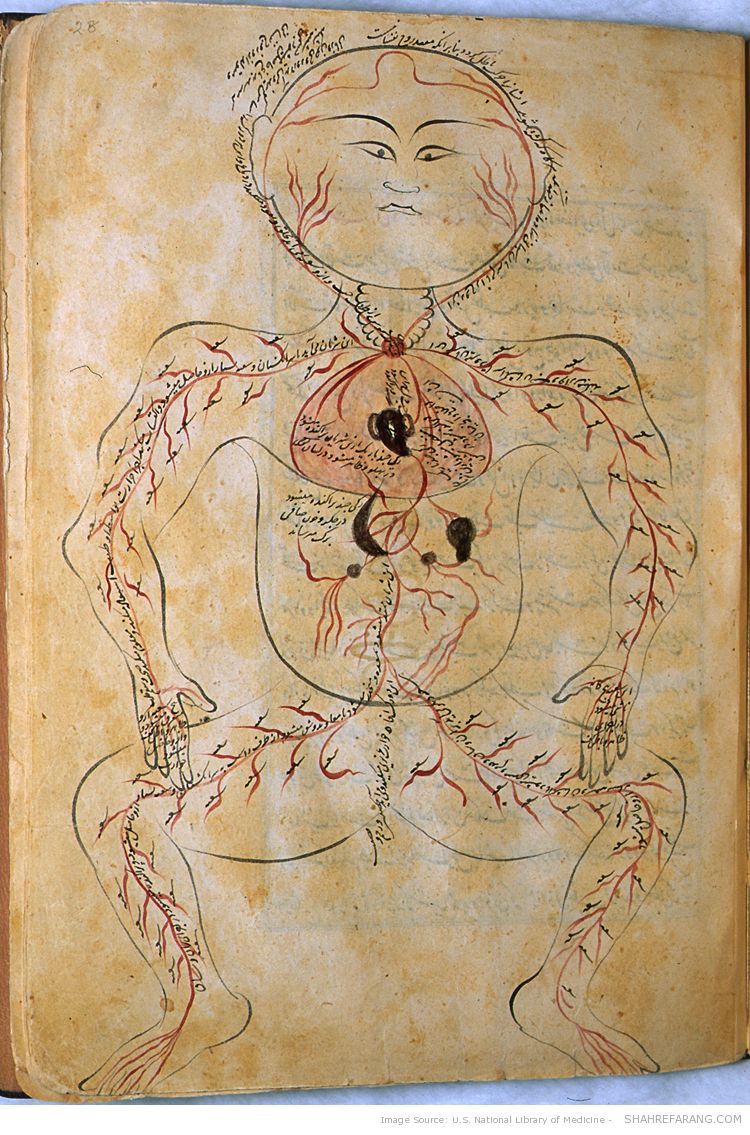
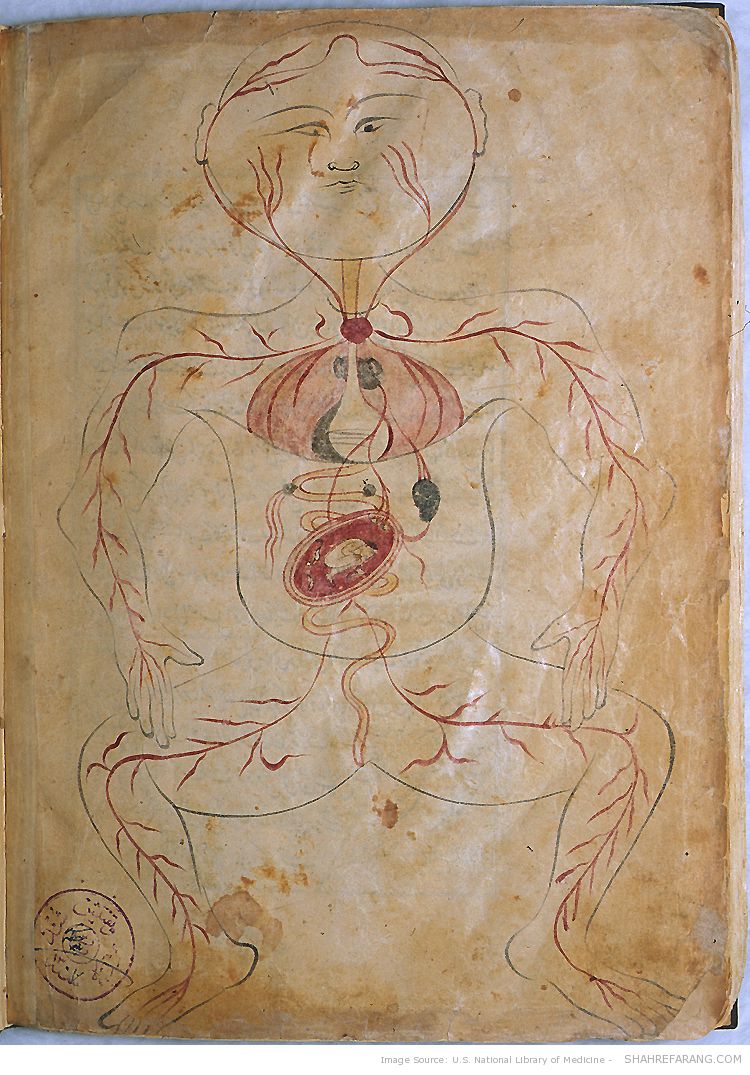
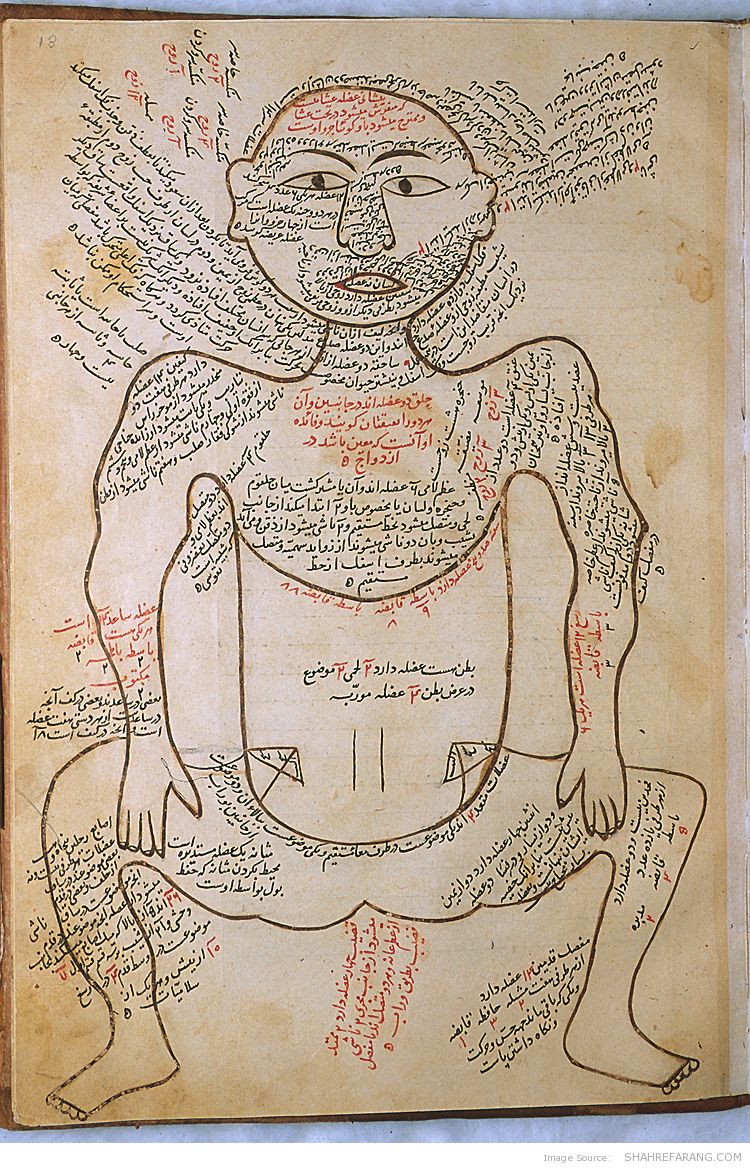
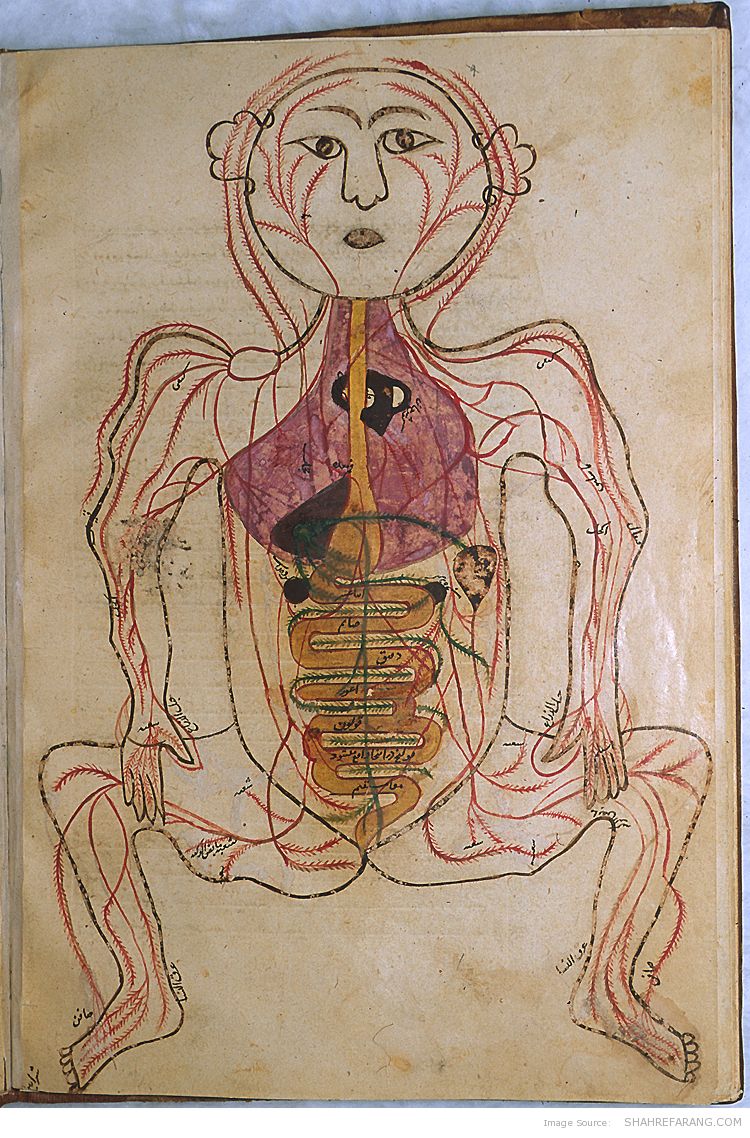
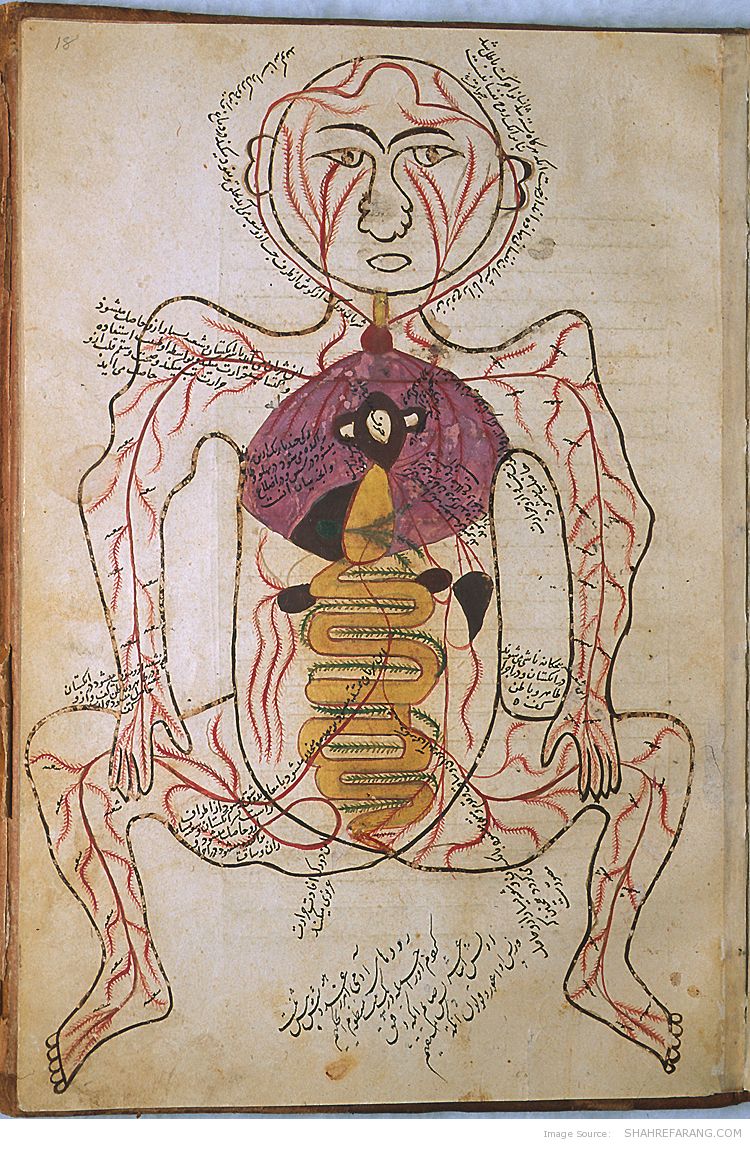
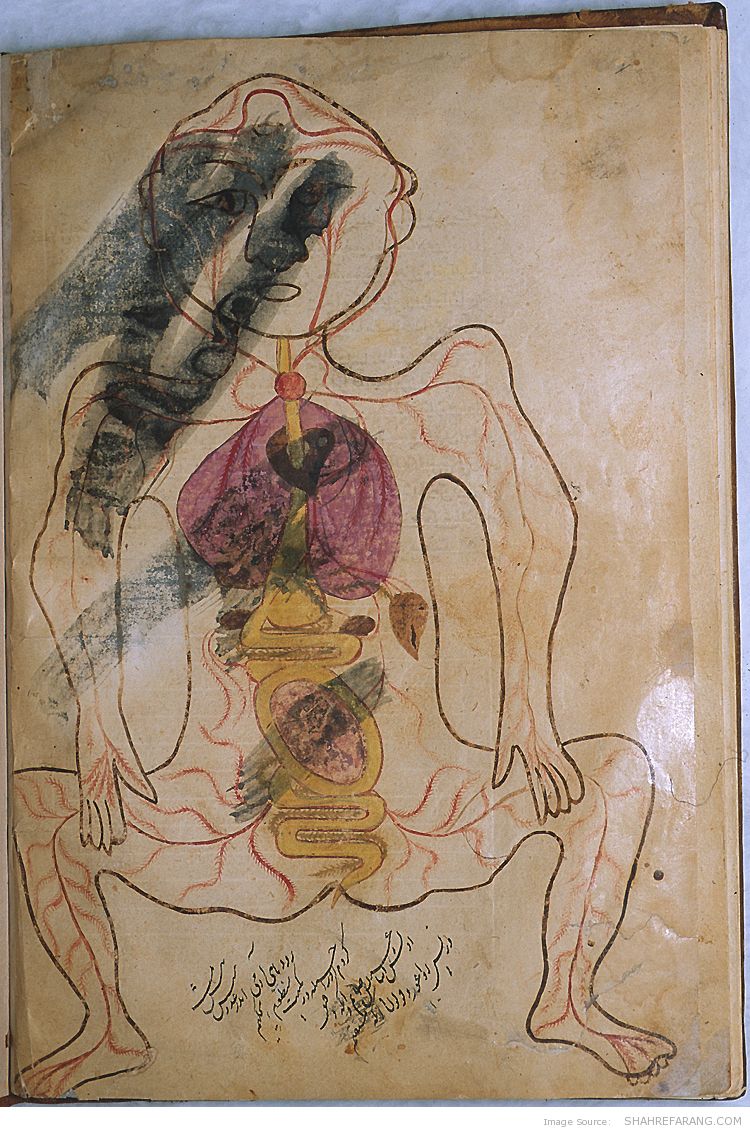
No anatomical illustrations of the entire human body are preserved from the Islamic world before those which accompany the Persian treatise composed by Mansur ibn Muhammad ibn Ahmad ibn Yusuf ibn Ilyas, who came from a Persian family of scholars and physicians working in the city of Shiraz.
The treatise consists of an introduction followed by five chapters on the five “systems” of the body: bones, nerves, muscles, veins, and arteries – each illustrated with a full-page diagram. The images here are from two manuscripts. The first one is from 1488. The other one is undated and unsigned; probably 15th or early 16th-century. (U.S. National Library of Medicine. → More)
First Manuscript (1488)
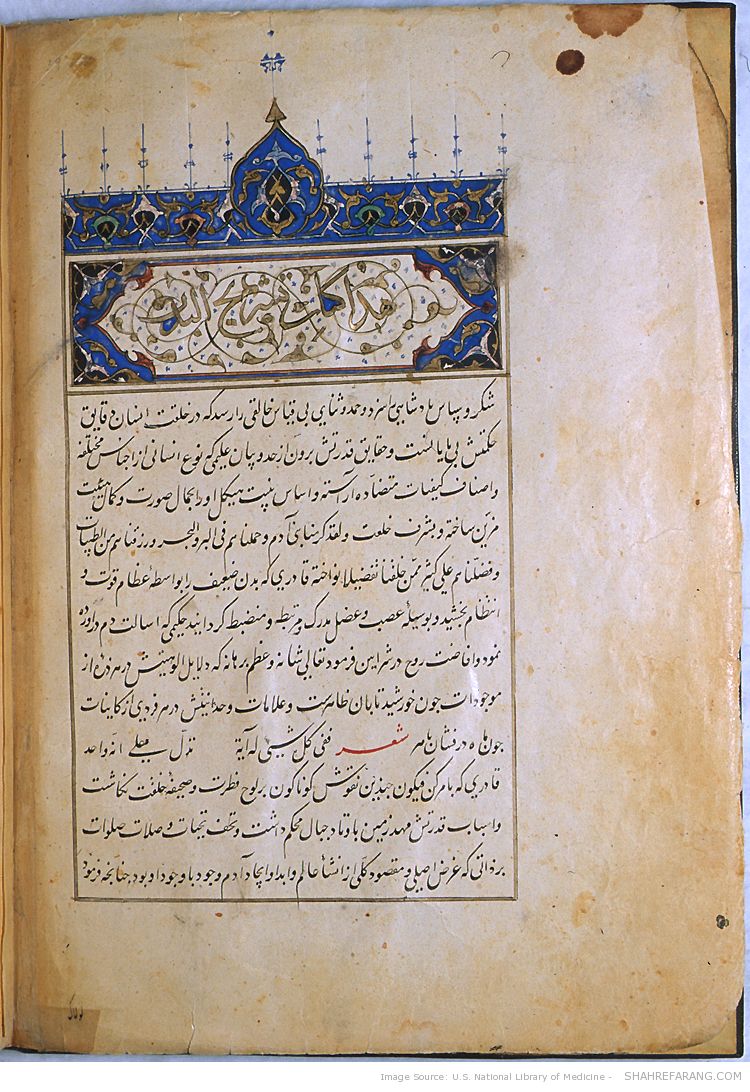
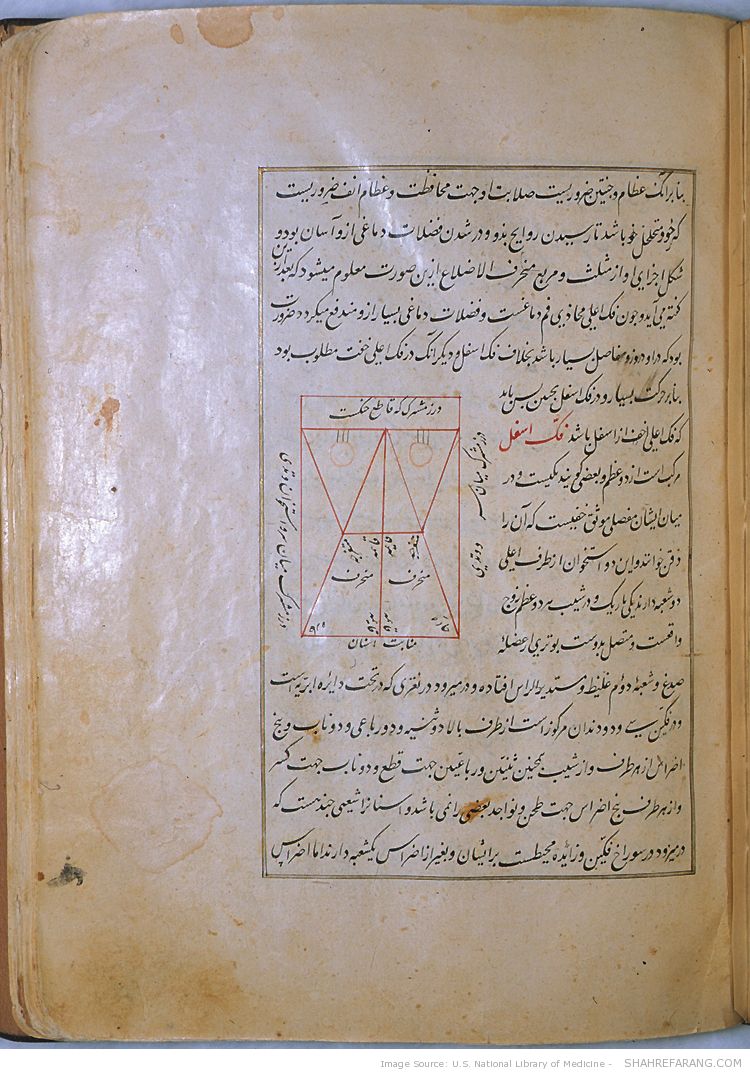
The Anatomy of the Human Body (1488), Introduction
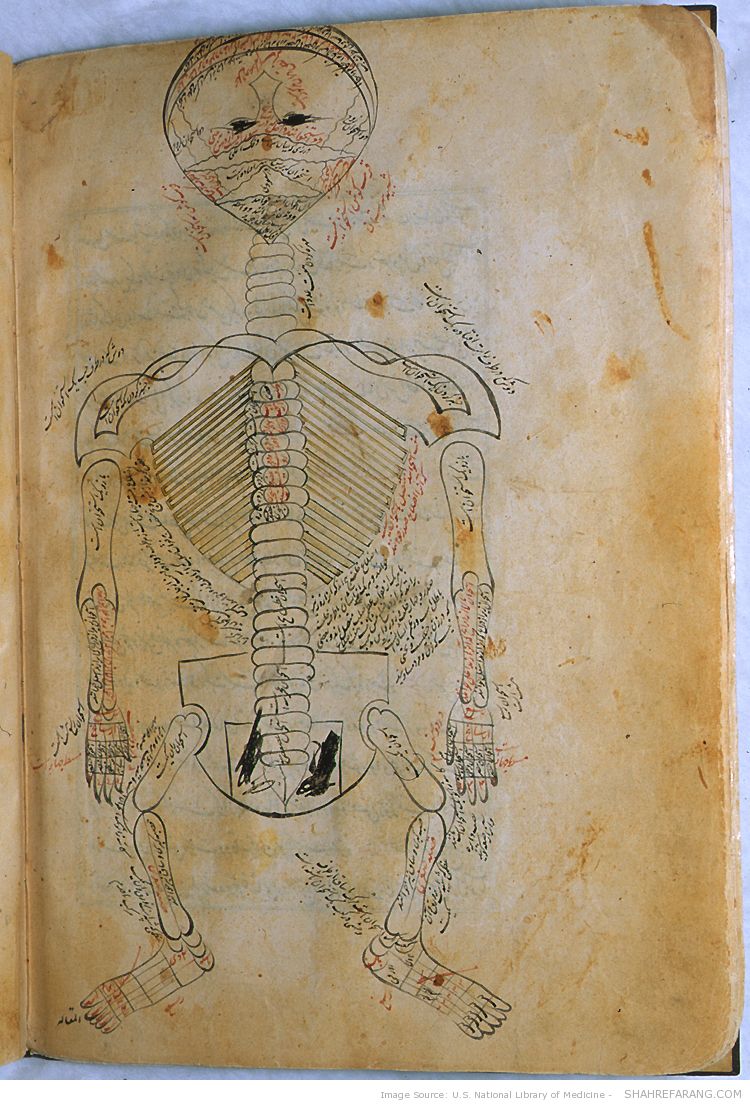
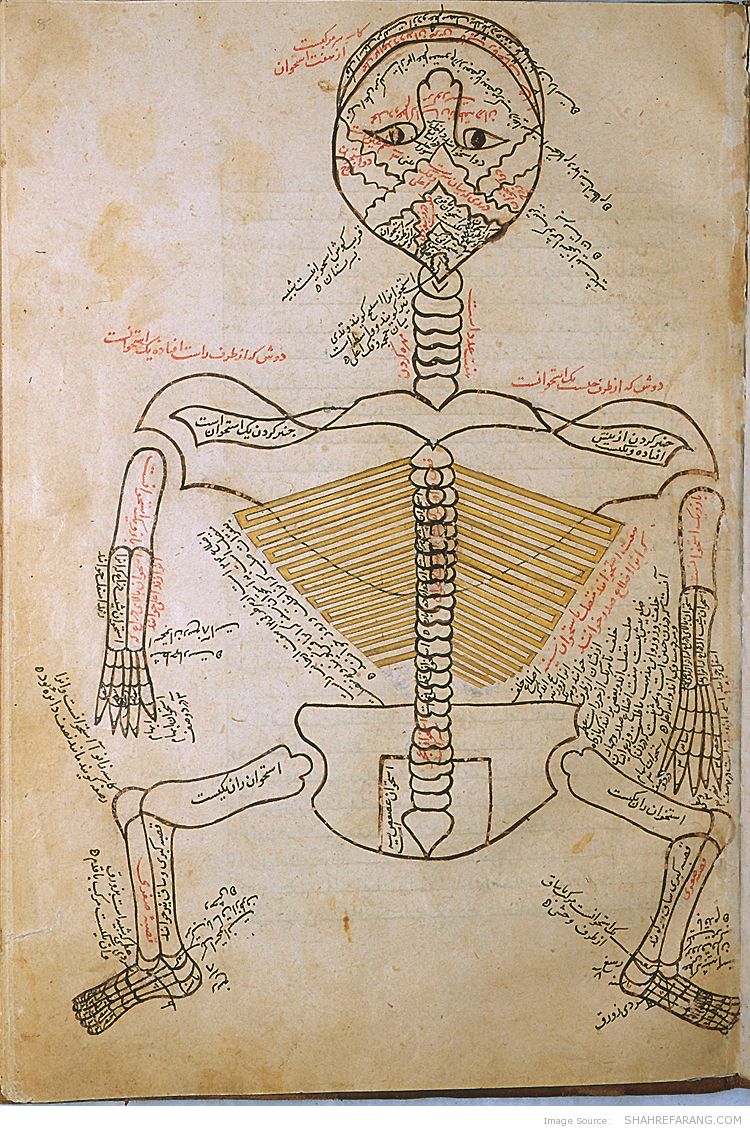
The Anatomy of the Human Body (1488), The skeleton
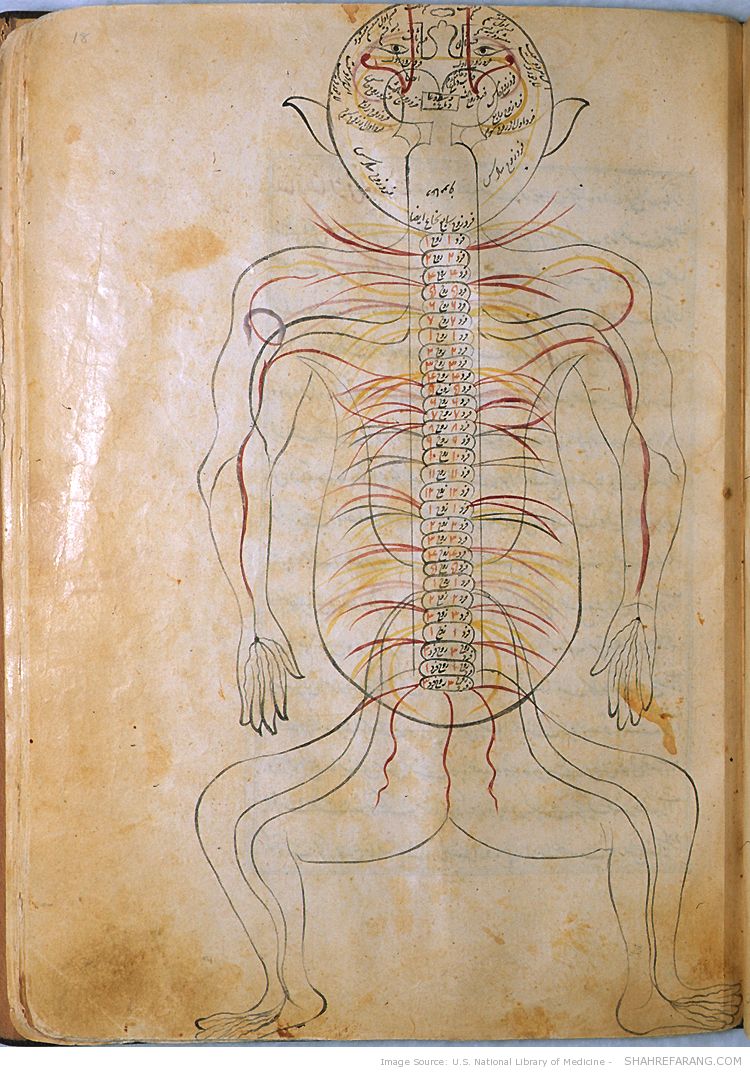
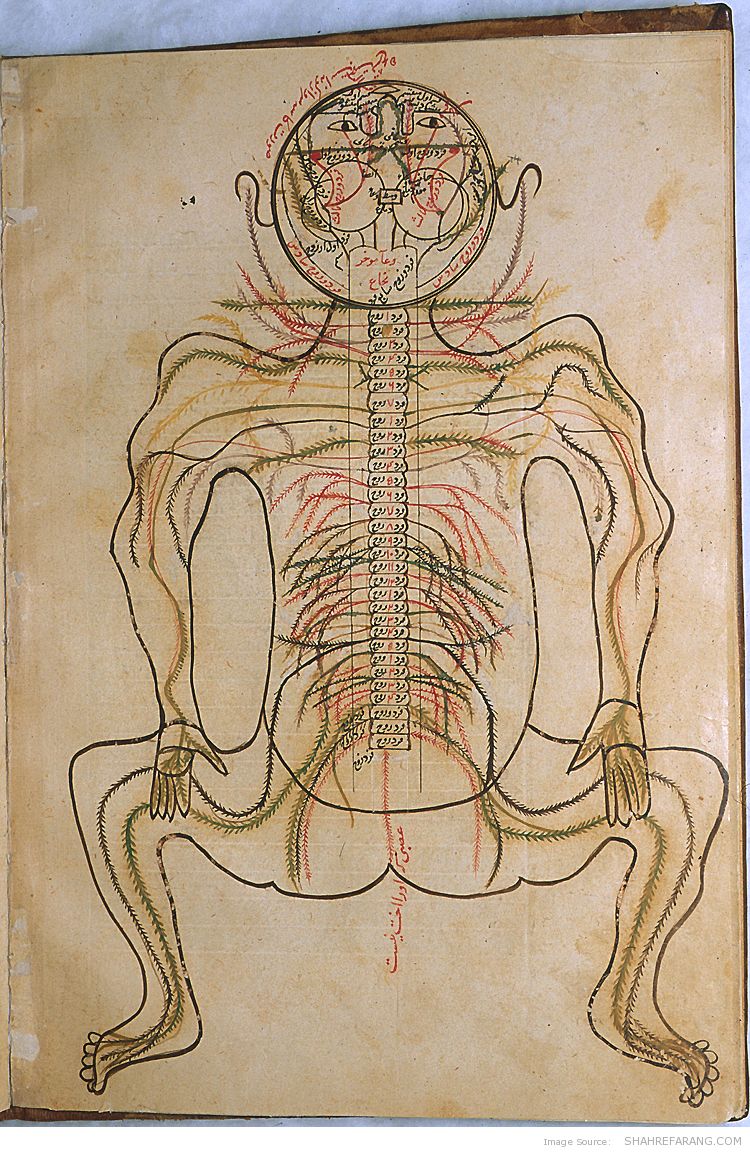
The Anatomy of the Human Body (1488), The nervous system
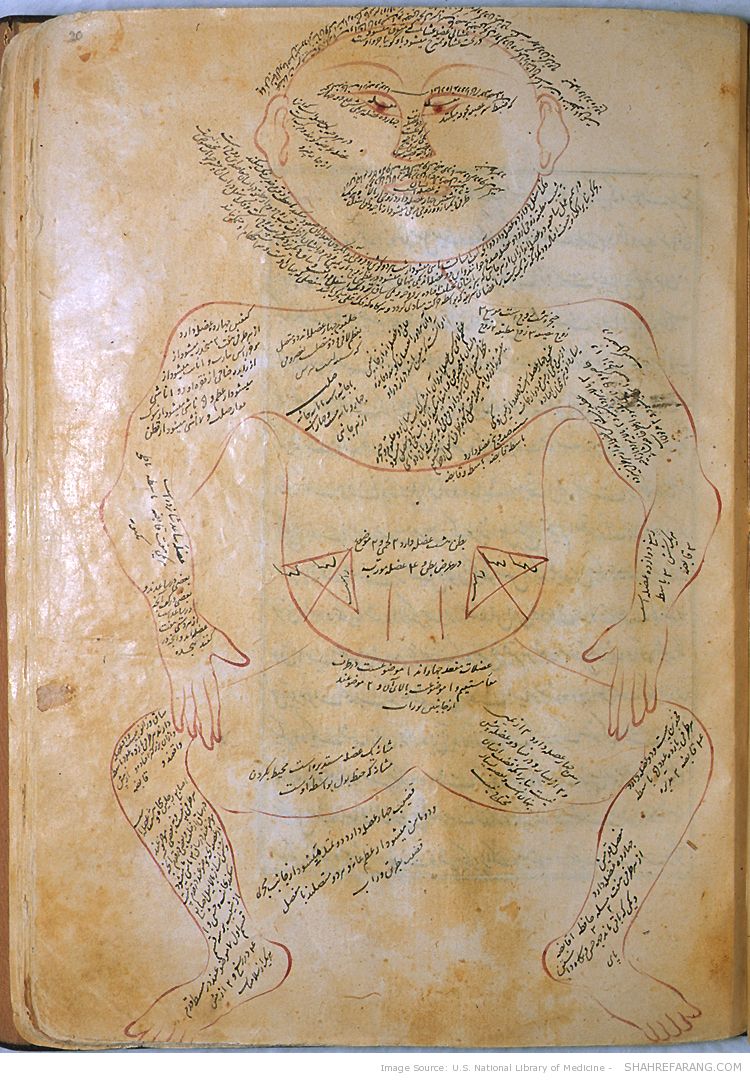
The Anatomy of the Human Body (1488), The muscle figure
The Anatomy of the Human Body (1488), The venous system
The Anatomy of the Human Body (1488), The arterial figure
The Anatomy of the Human Body (1488), The figure of a pregnant woman
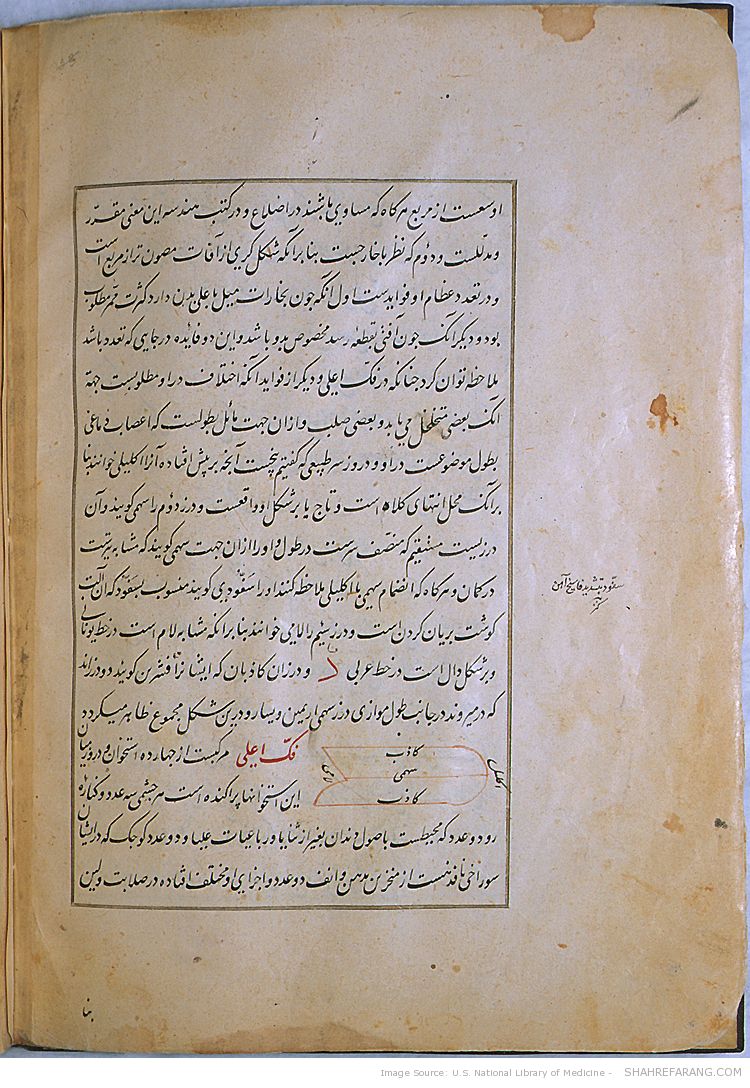
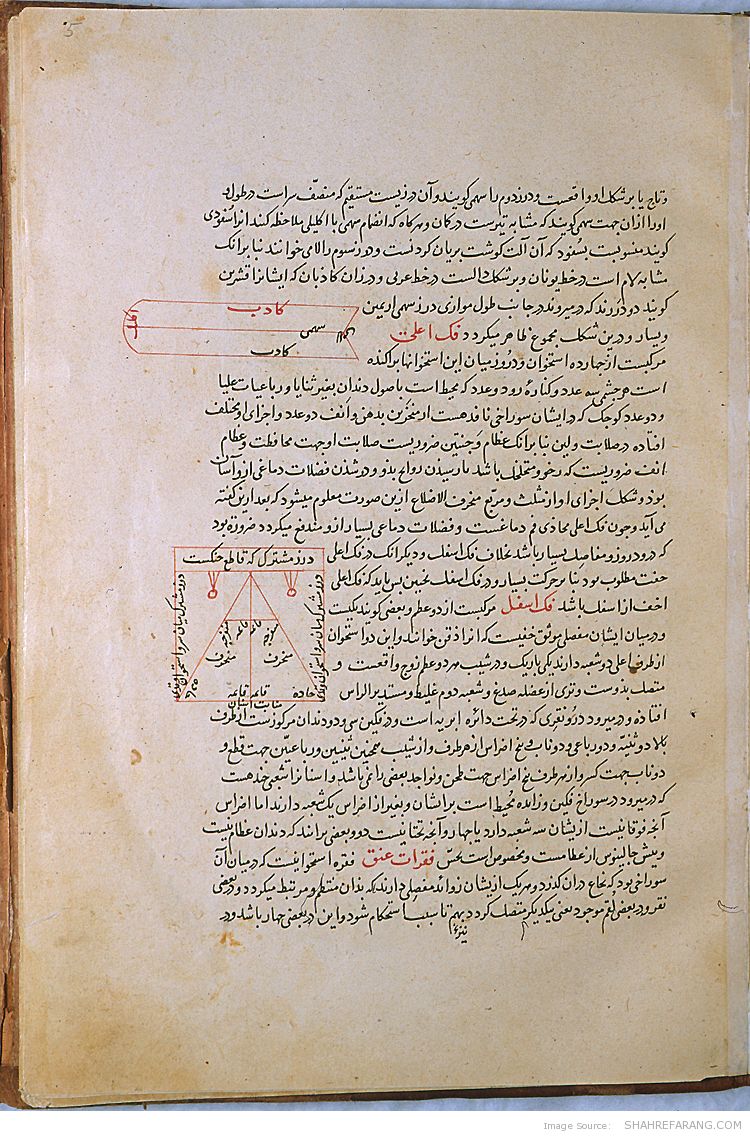
The Anatomy of the Human Body (1488), A diagram of the cranial sutures, drawn in red and black ink.
The Anatomy of the Human Body (1488), A schematic inked diagram of the bones of the upper jaw
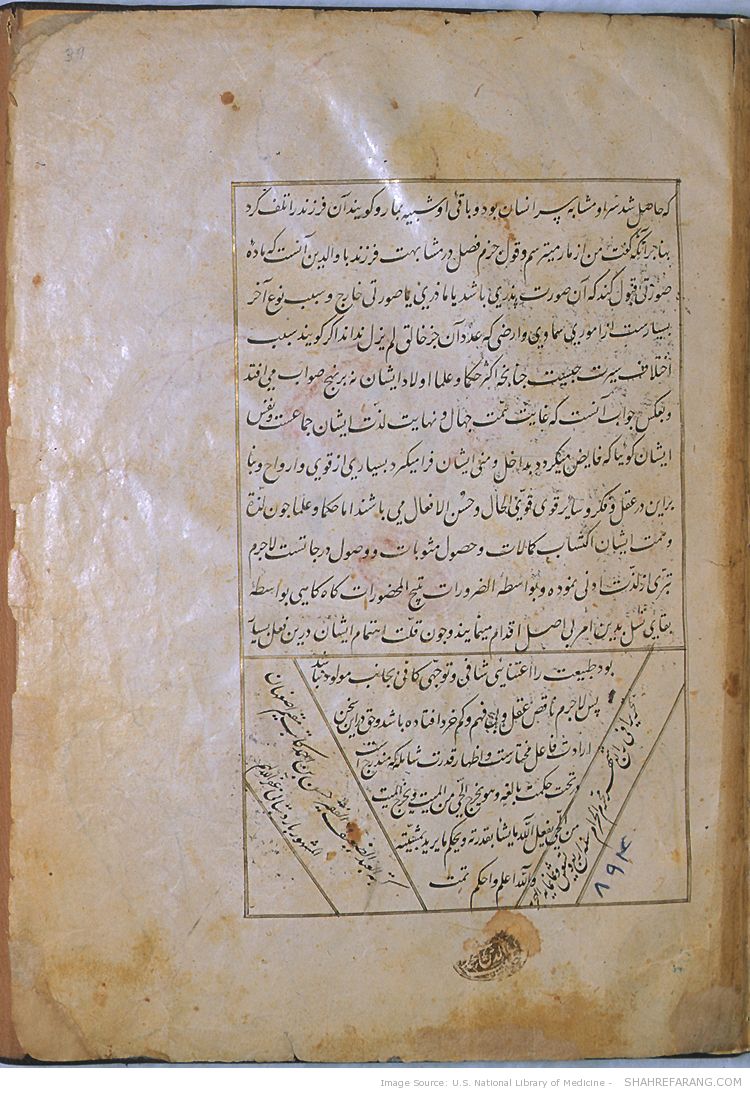
The Anatomy of the Human Body (1488), the last page
Second Manuscript (undated and unsigned; probably 15th or early 16th-century)
The Anatomy of the Human Body, The skeleton
The Anatomy of the Human Body, The nervous system
The muscle figure – نمای عضلات
The Anatomy of the Human Body, The venous system
The Anatomy of the Human Body, The arterial figure
The Anatomy of the Human Body (1488), The figure of a pregnant woman