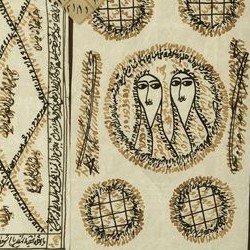
Talisman for Warding off Co-wife
An undated talisman for warding off co-wife. It is most probably from the late 19th century or early 20th century.
✤ Also available in:



An undated talisman for warding off co-wife. It is most probably from the late 19th century or early 20th century.
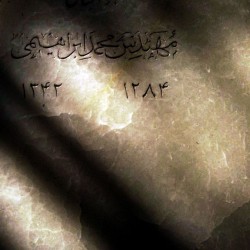
Emamzadeh Abdollah Cemetery is situated in the City of Ray (Shahr-e-Rey), the oldest existing city in the province. The interior of the tomb is thought to be built in Safavid Period (15th century). The family mausoleums are located in the courtyard of the shrine and are in the architectural styles of Qajar & Pahlavi periods.
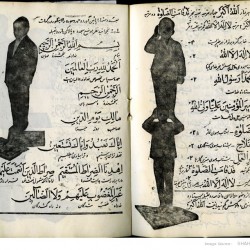
This popular Muslim Prayer Guide was published in the 1950s and continued to be in print until the 1970s.
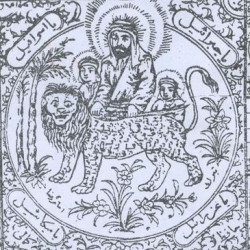
Traditionally, one needed to visit an expert to purchase a talisman. But in today’s Iran, thanks to the photocopier, one can buy a photocopied talisman from the shops near the Shiite shrines.
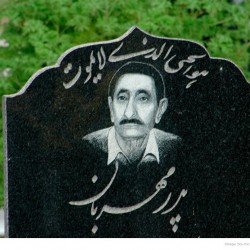
Documenting and preserving one’s image on gravestone or monument has never been common in the Iran. But since the introduction of photography and the emergence of western-inspired traditions of publishing obituaries in the newspaper, Iranian began to publish the pictures of their lost ones in daily newspapers, on posters, and more recently on gravestones.
These images are usually decorated with inscriptions and symbols. Women’s faces are mostly replaced with female pictograms.
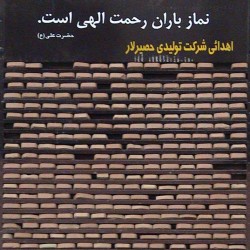
The Iranian government-run “Prayers Units” (Setade Eqameye Namaz) constantly remind people to do their daily prayers. They do that using billboards, signs, and ads.
Photographs by Hartmut Nieman
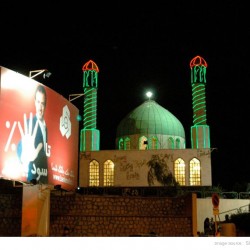
Today’s architecture and design of mosques in Iran is becoming simpler and less elaborate than before. Most of these new mosques look more like half-built structures and are vaguely reminiscent of the glorious mosques of the past. Green is the dominant colour used in the majority of these contemporary mosques.
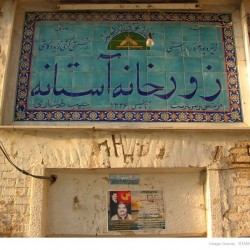
Placing Islamic inscriptions (mostly words from Quran) over the entrances to the houses, business places, or public buildings used to be common in the past. It seems placing these words on the entrances has its roots in an older tradition that sees a supernatural power in words.
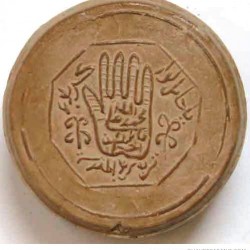
During their daily prayers, Shiite Muslims prostrates on a small block of earth, called “mohr” (meaning “stamp” in Persian) or “turbah”. The most favoured soil is that of Karbala in Iraq, the site of the martyrdom of Imam Hussein; however, soil from Mashhad or Qom in Iran may also be used. The writings on mohr often show where the clay comes from and some have the names of the Muslim saints written on them.
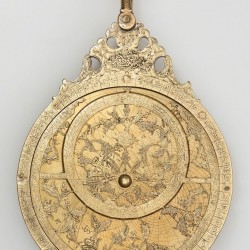
Astrolabes and celestial globes were instruments of astrology that were extensively used in the Persian world to create astrological maps. Mainly made of brass they mostly had detailed astrological charts and maps on the inside and on the back.