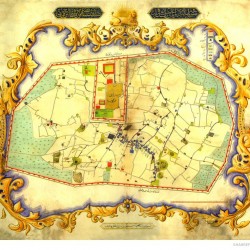
Six Old Maps of Tehran (1848-1925)
Six maps of the Tehran and Suburbs in Qajar period (1848 to 1925).
(Source: Nimrooz) – To see the details in the maps click on the images, hold down your mouse button, and move the pointer over the image.
✤ Also available in:



Six maps of the Tehran and Suburbs in Qajar period (1848 to 1925).
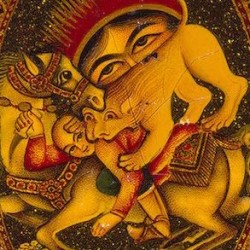
Ganjifa and Aas-Naas are traditional Iranian card games whose history goes back to the 15th century Safavid period. Apparently Ganjifa was similar to Hokm and Aas-Naas to Poker. These hand-painted playing cards are all from the late Qajar period and are made of lacquered papier-mâché.
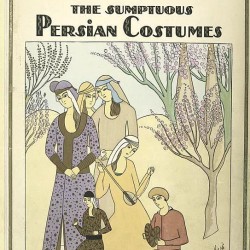
Plates from The history of the feminine costume of the world, from the year 5318 B.C. to our century by Paul Louis de Giafferri published in 1926-1927, New York.
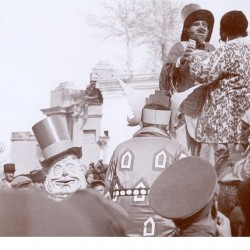
In 1933, following a dispute with the British government and Anglo-Persian Oil Company, the Iranian government demanded cancellation of the D’Arcy concession. The termination of D’Arcy Concession was celebrated in the streets of Tehran with a government-sponsored carnival.
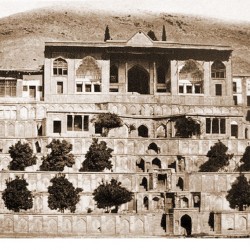
Located on a rocky hillside north of Shiraz at ‘Baba Koohi’, the Baghe Takht was a garden that existed as early as the eleventh century. A formal garden with a central water channel, it was laid out on multiple terraces with a palace at the uppermost terrace.
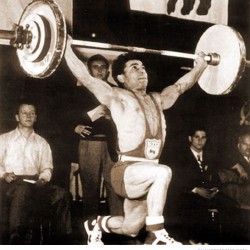
Iranian athletes have won a total of 60 medals in wrestling, weightlifting, taekwondo, and athletics.
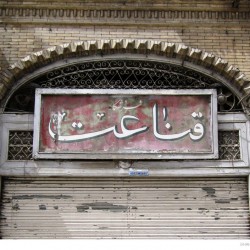
A collection of photographs of store signs from the 1950s and 1960s in Shiraz, taken in the winter and spring of 2012.
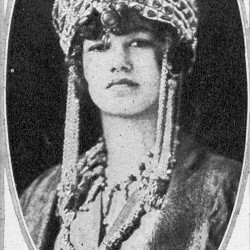
“Persian” costumes worn by young American society women in 1913 & 1914. As you can see the Western perception of Iran in the early 20th century was of an exotic and mysterious land, but today this has changed somewhat.

A collection of movie advertisements from the 1910s to the 1930s in Persian, Russian, and French.