✤ Also available in: Persian Arabic

Search

Visual Arts

Hossein Fahmideh - Enghelaab street, Tehran

Martyrdom in the Iranian Cityscapes

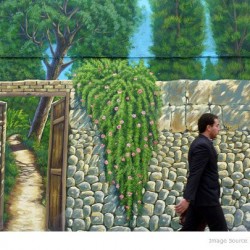
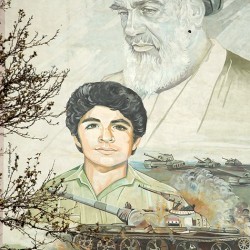
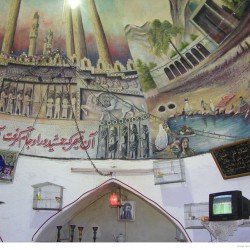
What is officially called the “culture of martyrdom” in Iran is omnipresent in every Iranian cityscapes. Martyrdom could be seen everywhere. On the walls, in the names of the streets, and on the public water fountains.
Read More »
Fath-ali Shah

Portraits of Fath-Ali Shah Qajar

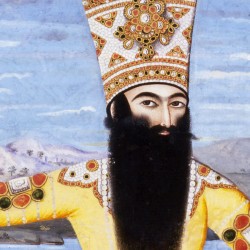
The Qajar king, Fath-Ali Shah (1772 – 1834) loved to have his image on large scale canvasses, frescoes, and reliefs, showing the grandeur of his imperial appearance. Most of his oil painting portraits are painted by Mirza Baba and Mehr-Ali.

Read More »

Shiite Mohr (Turbah)

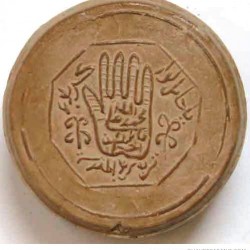
During their daily prayers, Shiite Muslims prostrates on a small block of earth, called “mohr” (meaning “stamp” in Persian) or “turbah”. The most favoured soil is that of Karbala in Iraq, the site of the martyrdom of Imam Hussein; however, soil from Mashhad or Qom in Iran may also be used. The writings on mohr often show where the clay comes from and some have the names of the Muslim saints written on them.

Read More »
مجله ملانصرالدین - “Molla Nasreddin” Magazine (69)

“Molla Nasreddin” Magazine

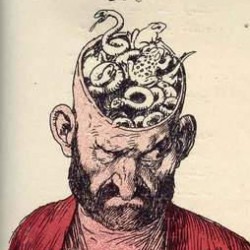
Molla Nasraddin was an eight-page Azerbaijani satirical periodical published in Tiflis (from 1906 to 1917), Tabriz (in 1921) and Baku (from 1922 to 1931) in the Azeri and occasionally Russian languages.

Read More »
Mo'avenol Molk Building, Kermanshah (1902)

Lion and Sun

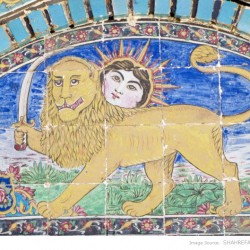
The Lion and Sun is one of the emblems of Iran and until 1979 was an element in Iran’s national flag. The motif, which illustrates ancient and modern Iranian traditions, became a popular symbol in Iran in the 12th century.

Read More »
Astrolobe, Khalili Collection

Astrolabes and Celestial Globes

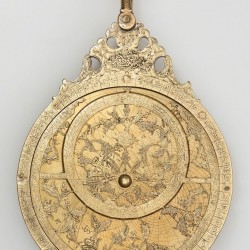
Astrolabes and celestial globes were instruments of astrology that were extensively used in the Persian world to create astrological maps. Mainly made of brass they mostly had detailed astrological charts and maps on the inside and on the back.

Read More »