✤ Also available in: Persian

Search

Qajar

Iranian Women in Harpers (Cover)

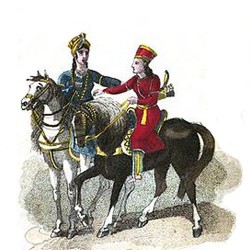
Iranian Women in Harper’s (1887)

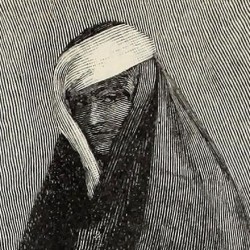
In May 1887, the American periodical “Harper’s New Monthly Magazine” published an article about a trip from Tehran to Baghdad. The following images are from that article and show the outfits of Iranian women in that period. The photographs show the clothing of different minorities, as well as outfits for indoor and outdoor use and the different seasons.
Read More »
Qajar women

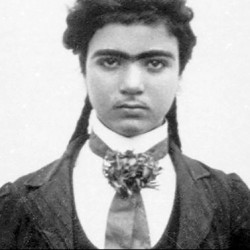
Portraits of Qajar Women

Portraits of Iranian women from the late Qajar period (late 19th century to early 20th century). The images are from the photo archive of Institute for Iranian Contemporary Historical Studies.

Read More »
Zahiroleslam’s House, Tehran, December 12, 2013 (2)

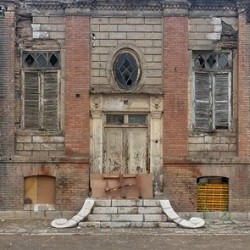
Zahirol-Eslam’s House

According to the latest news Zahiroleslam’s House is going to be demolished soon. The house is one of the rare examples of the architectural fusion style of the early 20th century that combines elements of Iranian traditional architecture with European styles.

Read More »

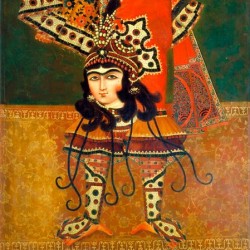
Qajar Female Tumblers

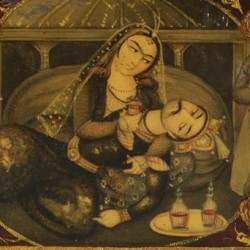
Female dancers, sometimes holding knives while performing acrobatics, were the subjects of paintings in Qajar Period. None of these acrobatic performances are documented in the photographs of the era.

Read More »
Old Tomb of Hafez

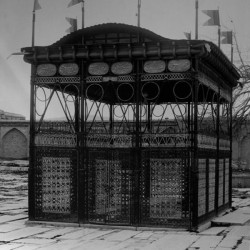
Old Tomb of Hafez

In 1901 Prince Malek Mansur Mirza Shao es-Saltaneh ordered Ali-Akbar Mozayyen-al-Dawla Naghash-bashi to make a decorative iron transenna for the Tomb of Hafez. The current Mausoleum was designed by André Godard, French archeologist and architect, in the late 1930s.

Read More »
Description of prison life in one of the earlier pieces

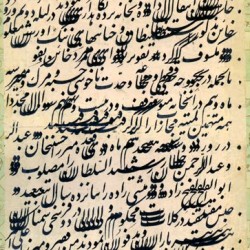
Calligraphy in Prison

Mirza Mohammad Seifi Qazwini, also known as Emadolkottab (1861-1936), was a master calligrapher of Nasta’liq in the late Qajar period. Because of his membership in a terrorist group “Komiteye Mojazat – punishment committee” and writing the group’s unsigned leaflets, he was arrested and spent five years of his life in prison.

Read More »
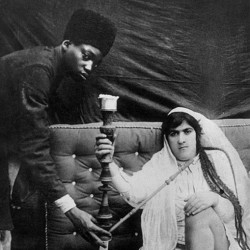
Prostitute and Slave, Photograph by Antoin Sevruguin

Sale Document of a Male Slave (1901)

Sale document of an Abyssinian male eunuch slave, Haji Bashir Khan, between Malik Mansur Mirza Shoaosaltaneh and Faraj Allah Khan Ata o-Dowleh, the head of artillery in the state of Fars, Iran, issued in 25 August 1901. Slavery was formally abolished in Iran in 1929.

Read More »
Pen Case with Scenes from the Haft Paykar

Pen Case with Scenes from the “Haft Paykar”

This pen case is decorated with scenes from the Haft paykar (or Seven Images), one of five compositions that make up the Khamsa (Quintet) by the medieval poet Nizami of Ganja (ca. 1141–1209). This work narrates the life of the pre-Islamic Sassanian king Bahram V Gur, who is transformed from a pleasure-seeking prince into a wise and just king guided by law.

Read More »